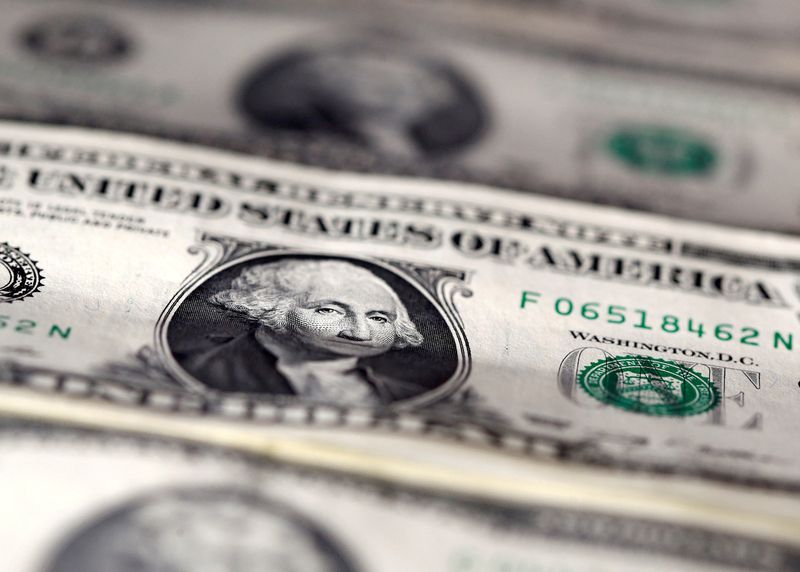
Just months after a U.S. tariff shock whacked the dollar, a rush by overseas investors to protect U.S. holdings from the sliding currency has slowed sharply. This slowdown is a vote of confidence that’s helping the greenback recover from its worst rout in years.
While analysts note that investor hedging remains higher than historical levels, such activity has decelerated compared to the period immediately after April 2. On that date, dubbed “Liberation Day,” U.S. President Donald Trump announced sweeping trade tariffs, which initially caused tumbling stock and bond prices alongside a plummeting dollar. At the time, nimble investors moved to hedge against further dollar decline, and the trend was expected to gain momentum. Instead, it has slowed, allowing the U.S. currency to stabilise. David Leigh, Nomura’s global head of FX and emerging markets, stated, “The conversations we’re having with clients now suggest that these (hedging) flows are less likely to come as imminently as the conversations we had back in May suggested they would.” The dollar index, which tracks the greenback against other major currencies, has rallied nearly 4% since the end of June. This follows its biggest first-half dive since the early 1970s, which had resulted in losses of almost 11%. Data on hedging is limited, with analysts extrapolating from scarce public figures and numbers compiled by banks and custodians. Analysis from BNY, one of the world’s largest custodians, shows clients were very long U.S. assets in early 2025, suggesting they did not anticipate much additional dollar weakness and were content to operate without extensive hedging. This changed in April, and hedging is now higher than normal, though lower than in late 2023 when markets began anticipating Federal Reserve rate cuts. Geoff Yu, BNY’s senior market strategist, remarked, “The dollar diversification story this year is more talked about than actioned upon.” Other giant custodians reported a similar picture. State Street Markets’ analysis of assets under custody and administration revealed that as of the end of October, foreign equity managers’ hedging of their dollar holdings was 24%. This represents a 4 percentage-point increase since February but remains well below the 30%-plus hedge ratio seen in the past. They also noted the activity had slowed in recent weeks. Hedging behavior varies by market. A November National Australia Bank survey of Australian pension funds found “no material change in hedging behaviour towards U.S. equities.” Conversely, Danish central bank data shows hedging by pension funds there has stabilised after increasing post-April. Columbia Threadneedle CIO William Davies said the firm initially moved to protect its U.S. stock holdings against further dollar weakness but has since unwound some of its hedges, betting the currency will not decline further. Hedging itself can cause currencies to move. Adding protection against dollar downside to a previously unhedged position effectively involves selling the greenback, and vice versa. However, the expected snowball effect has not materialized.If combined with shifting interest rates, the effect can be dramatic – a dollar selloff can spark more hedging, sending it lower still.
“People, earlier this year, were getting excited that this snowball effect would develop, though in the end it didn’t really,” said HSBC’s Paul Mackel, global head of FX research. For next year, “it’s something to keep an eye on, but it’s not our baseline scenario”. Still investor behaviour may be shifting. BlackRock estimates that 38% of flows into Europe, Middle East and Africa-listed U.S. equity exchange-traded products this year have been into those with FX hedges, a meaningful change from 2024 when 98% of flows were unhedged. Cost is also a factor, and depends on rate differentials and so varies by market. This may help explain some of the reluctance to hedge positions. Japanese investors pay around an annualised 3.7% to hedge against dollar weakness, estimates Van Luu, Russell Investments’ global head of solutions strategy for fixed income and FX. This is a sizeable sum – if dollar/yen holds steady for a year, an investor is down 3.7% versus an unhedged peer. The equivalent cost for a euro-funded investor is around 2%. “I have a rule of thumb for euro investors, if the cost is around 1% they don’t care much, but if it’s 2% then it becomes a factor,” Luu said. Asset correlations matter too. Traditionally the dollar strengthens when stocks fall, meaning overseas investors are effectively protected on their U.S. positions. That did not happen in April, contributing to the hedging rush. This month, the dollar held steady as stocks tumbled again. Change is also complicated for the many investors who aim to outperform a fixed benchmark if that benchmark is unhedged. Fidelity International recommends Europe-based investors move gradually towards hedging 50% of their dollar exposure, but Salman Ahmed, head of macro and strategic asset allocation, notes it is a “very involved” process which can require governance and benchmark changes. If interest rates move against the dollar and it starts to weaken again, and hedges become cheaper, pressure for change may build. “There’s still lots of scope for dollar investments to be hedged, whether that comes to pass and how quickly is an open question,” said Nomura’s Leigh. “That’s what the FX market’s trying to get its head around.”